The phrase "99.99% pure" is not, in the precision-metals world, a marketing slogan. It is a specification with a defined analytical-chemistry basis and defined performance consequences. When a nickel product is labelled NP1 under the GOST 492-1973 specification, it is warranted to contain no less than 99.99% nickel by mass, with a specifically bounded envelope of permitted trace impurities: sulfur below 5 ppm, carbon below 10 ppm, oxygen below 10 ppm, iron below 20 ppm, cobalt below 50 ppm, copper below 25 ppm, with similar bounds on the remaining elements in the impurity fingerprint.
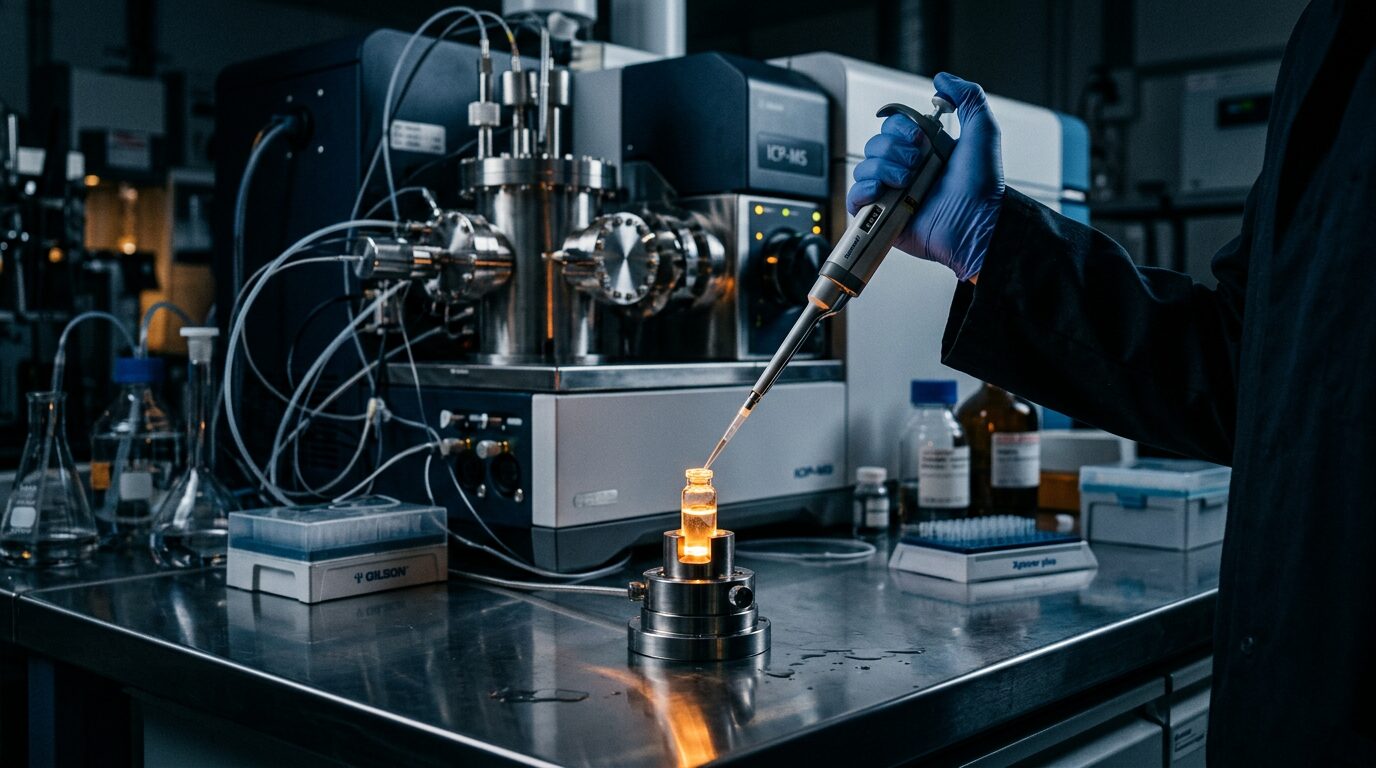
These bounds are measured by inductively-coupled-plasma mass spectrometry (ICP-MS), glow-discharge mass spectrometry (GD-MS), or — for oxygen, nitrogen, and carbon — by combustion-analysis techniques calibrated against certified reference materials. The measurement uncertainty at the ppm level is non-trivial; a credible NP1 certification requires a laboratory with appropriate metrological competence and, for institutional applications, independent third-party validation. In the ALKN reserves context, material purity, specifications, and performance are validated by five independent institutions and a leading scientist across three continents — Prof. Upadrasta Ramamurty (NTU Singapore), IIT Delhi, Lectromec (ISO/IEC 17025:2017 accredited; testing under NASA JPL wire certification protocols), Allkema Engineering Srl / ASACERT UK, and NSL Analytical USA — against the NP1 specification. Prof. Ramamurty's validation reflects his personal scientific assessment and published research; it does not constitute an institutional endorsement by NTU Singapore. IISc Bangalore research is referenced in the scientific literature for hydrogen electrolysis performance benchmarks but is not presented as an institutional validator of the ALKN asset.
Why these specific impurity bounds
Each trace-impurity bound in the NP1 specification corresponds to a physical phenomenon that degrades one or more downstream application properties. Sulfur, above 5 ppm, segregates to grain boundaries and causes hot-shortness — a failure mode in which the material cracks at elevated temperatures. For alkaline-electrolyser wire, sulfur at Class-2 levels (often 200–500 ppm) would poison the nickel-catalysed hydrogen-evolution reaction within hours of service.
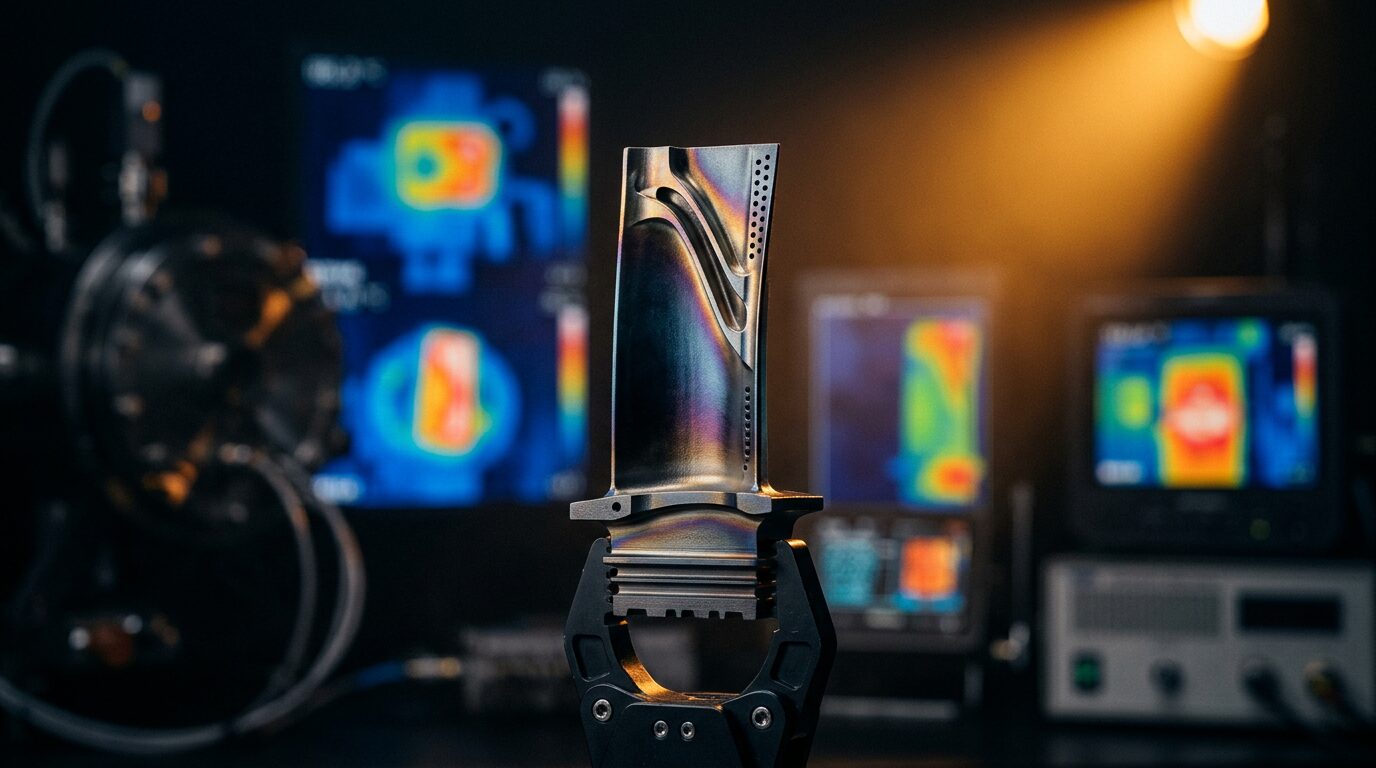
Carbon, above 10 ppm, forms nickel carbides that embrittle the metal. For aerospace-grade superalloy precursor feedstocks, carbon at Class-2 levels disqualifies the material from turbine-blade service, because the carbide precipitates reduce high-temperature creep life by an order of magnitude.
Oxygen, above 10 ppm, forms nickel oxide inclusions that act as crack-initiation sites under cyclic loading. For cryogenic LNG-tank service or for EMI-shielded microelectronic housings, oxygen at elevated levels reduces fatigue life and alters the magnetic-permeability profile that makes nickel a useful shielding material.
Iron, cobalt, and copper — collectively, the transition-metal impurity burden — alter the ferromagnetic response, the electrical conductivity, and the corrosion behaviour of the material. At Class-2 levels, each contributes a shift in material properties that is individually small but, in combination, disqualifies the material from precision applications.
How NP1 is actually made
Each trace-impurity bound in the NP1 specification corresponds to a physical phenomenon that degrades one or more downstream application properties.
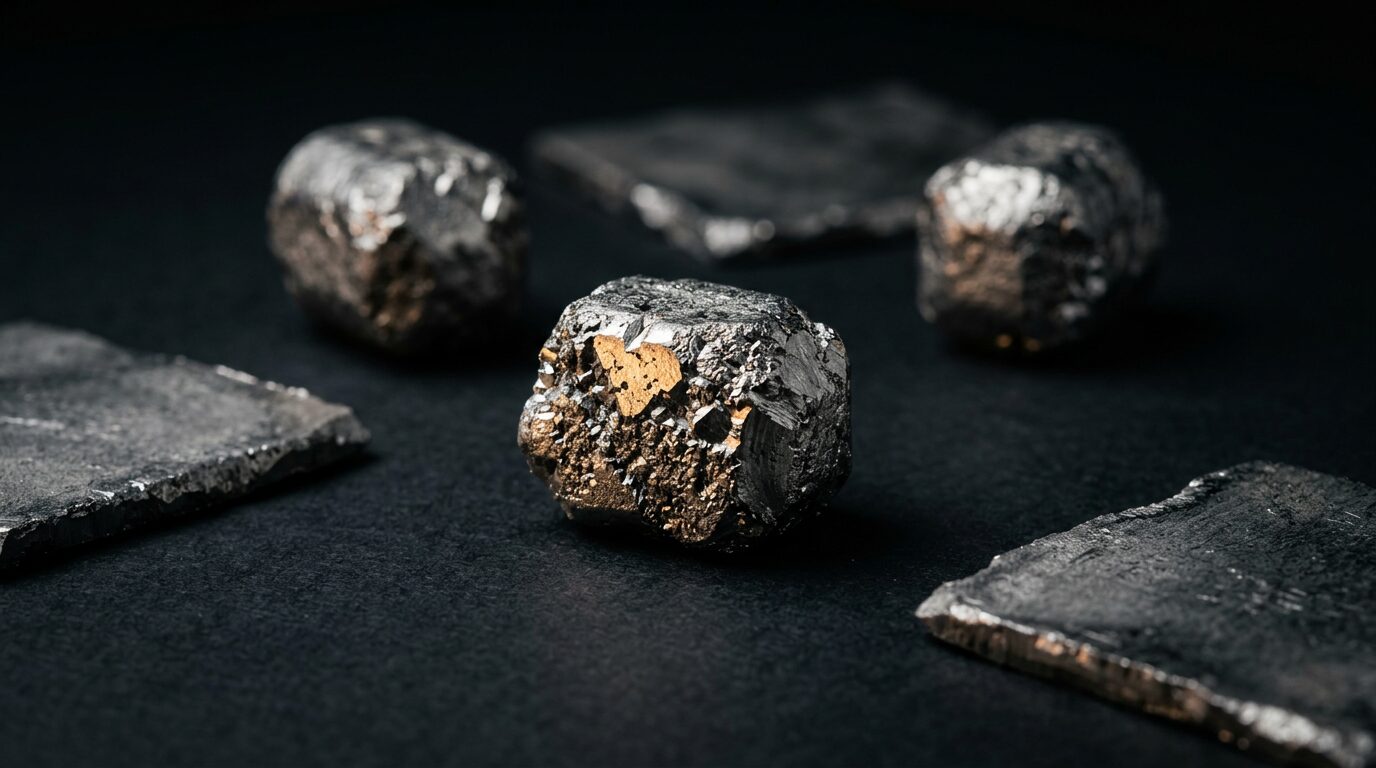
NP1-grade nickel is produced through a sequential refining cascade that starts with a high-grade ore body — historically sulfide-rich ores from Siberian, Finnish, or Canadian deposits, more recently including high-grade laterite feedstocks processed through high-pressure acid-leach refining. The primary smelting step produces matte nickel (75–80% Ni); subsequent electrolytic refining — the Mond carbonyl process or direct electrowinning from sulfate or chloride electrolyte baths — brings the material to approximately 99.9% purity. The final step to 99.99% requires a specialist re-refining operation, typically vacuum-arc remelting or electron-beam remelting, under inert-atmosphere conditions that evolve the residual oxygen and nitrogen out of the melt.
The specialist re-refining step is the bottleneck. There are perhaps a dozen facilities globally that perform it at commercial scale. Capacity expansion requires specialist furnaces, specialist gas-atmosphere systems, and a metallurgical-engineering workforce that is not, at present, being trained at the rate the downstream demand is expanding.
Why NP1 is priced differently
Commodity-nickel pricing — the LME Class-2 contract — reflects the marginal cost of producing stainless-steel-grade feedstock, which is abundant. NP1 pricing reflects the marginal cost of producing a specification-compliant feedstock for electrolyser-wire, superalloy, and compound-semiconductor service. The cost structure is different; the supply curve is different; the demand curve is different. The two prices are correlated, because they share an ore-body-cost component, but they are not substitutable.
The historical NP1 premium over LME Class-2 has sat in a range of 2–4x for many years. Under the structural demand pressure now visible, that premium has been widening. A regulated digital security backed by a defined NP1 physical reserve — priced against an independent Aranca reserves valuation — is therefore a direct institutional exposure to this specific pricing curve, not to the LME Class-2 commodity curve that financial journalists usually quote when they report on "nickel prices."
What this means for allocators
Three implications. First: when evaluating a nickel-backed digital security, the specification of the backing matters more than the gross tonnage. A tonne of NP1 and a tonne of Class-2 are, economically, different instruments. Second: the structural demand for NP1 is visible in sector data but invisible in headline commodity indices; allocators must look past the LME print to see the relevant market. Third: the supply response at NP1 grade is slow, because the re-refining bottleneck is real. This is the condition under which a physically-backed regulated digital security at this grade is worth institutional attention. The material is the thesis.
Sources
- GOST 492-1973. Russian State Standard for Primary Nickel. Gosstandart. 1 Jan 1973. https://docs.cntd.ru/document/1200000957 Accessed 14 Apr 2026
- NSL Analytical Services. NP1 Chemistry Validation Report. NSL Analytical. 1 Dec 2025. https://www.nslanalytical.com/ Accessed 14 Apr 2026
- Ramamurty et al.. ICP-MS Calibration Studies on Precision Nickel. NTU Singapore. 15 Oct 2025. https://dr.ntu.edu.sg/ Accessed 14 Apr 2026